Buy bilder-hosting.eu ?
We are moving the project
bilder-hosting.eu .
Are you interested in purchasing the domain
bilder-hosting.eu ?
domain@kv-gmbh.de · 0541-91531010
Buy bilder-hosting.eu ?
What are conjunctional clauses, relative clauses, demonstrative clauses, and infinitive clauses?
Conjunctional clauses are dependent clauses that are introduced by a conjunction, such as "because," "although," or "while." They provide additional information about the main clause in a sentence. Relative clauses are also dependent clauses that provide more information about a noun in the main clause. They are introduced by relative pronouns like "who," "which," or "that." Demonstrative clauses are dependent clauses that function as adjectives and provide more information about a noun in the main clause. They are introduced by demonstrative pronouns like "this," "that," "these," or "those." Infinitive clauses are dependent clauses that are formed with an infinitive verb (to + base form of the verb). They can function as nouns, adjectives, or adverbs in a sentence. **
Are conjunctive clauses always adverbial clauses?
No, conjunctive clauses are not always adverbial clauses. While adverbial clauses are a type of conjunctive clause that function as adverbs to modify verbs, adjectives, or other adverbs, there are also other types of conjunctive clauses. For example, there are conjunctive clauses that function as noun clauses, such as in "I know that you are busy." In this sentence, "that you are busy" is a conjunctive clause functioning as a noun clause, not an adverbial clause. Therefore, conjunctive clauses can serve various grammatical functions beyond just adverbial clauses. **


Similar search terms for Clauses
Top-Angebote
Products related to Clauses:
-
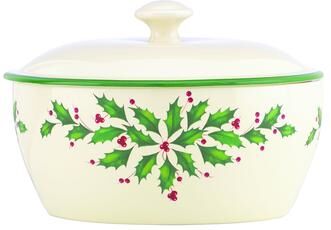
Lenox Hosting The Holidays Covered CasseroleThis Hosting the Holidays Casserole Dish is ideal for serving large dinner parties. Crafted of durable ivory porcelain, this spacious dish features a festive holly motif and comes with a matching lid.45,99 $*Shipping: 0,00 $Secure redirect to the provider
-
Lenox Hosting The Holidays Bread TrayWhether presenting an assortment of rolls or a buttery log of Texas toast, this festive ceramic Hosting the Holidays Bread Tray will not disappoint. The tray features a holly motif and is accented with 24-karat gold.44,49 $*Shipping: 0,00 $Secure redirect to the provider



-
What are relative clauses and conjunctional clauses?
Relative clauses are clauses that provide additional information about a noun in the main clause. They are introduced by relative pronouns such as "who," "which," "that," and "whom." For example, in the sentence "The book that I read is very interesting," the relative clause "that I read" provides more information about the noun "book." Conjunctional clauses, on the other hand, are clauses that are connected to the main clause by conjunctions such as "and," "but," "or," "if," and "because." They can express relationships such as addition, contrast, alternative, condition, and cause. For example, in the sentence "I will go to the park if the weather is nice," the conjunctional clause "if the weather is nice" expresses a condition for the action in the main clause. **
-
What are the French conditional clauses (si-clauses)?
French conditional clauses, also known as si-clauses, are used to express a hypothetical situation and its potential outcome. They consist of two parts: the si clause (if clause), which describes the condition, and the main clause, which describes the potential result. The si clause is typically formed using the conjunction "si" followed by the imperfect tense or the pluperfect tense, while the main clause is formed using the conditional tense. These clauses are commonly used to talk about what would happen in certain situations if a specific condition were met. **
-
How can one recognize main clauses and subordinate clauses?
Main clauses can stand alone as complete sentences, while subordinate clauses cannot. Subordinate clauses often begin with subordinating conjunctions such as "although," "because," "if," "when," or "while." They also often contain a subject and a verb, but they do not express a complete thought on their own. Main clauses, on the other hand, express a complete thought and can function as independent sentences. By identifying these characteristics, one can recognize main and subordinate clauses in a sentence. **
-
How can subordinate clauses be rewritten as main clauses?
Subordinate clauses can be rewritten as main clauses by removing the subordinating conjunction and making any necessary adjustments to the verb tense or word order. For example, the subordinate clause "because she was tired" can be rewritten as the main clause "she was tired." This transformation allows the subordinate clause to stand alone as a complete sentence. Additionally, any pronouns or other words that were dependent on the subordinating conjunction may need to be adjusted to ensure the new main clause is grammatically correct. **


How can adverbial clauses be used as subordinate clauses?
Adverbial clauses can be used as subordinate clauses to provide additional information about the main clause. They can modify the verb in the main clause by expressing time, place, manner, condition, reason, purpose, or concession. For example, in the sentence "She went to bed after she finished her homework," the adverbial clause "after she finished her homework" provides information about the timing of the main action "She went to bed." Adverbial clauses are introduced by subordinating conjunctions such as after, before, while, since, because, if, although, etc. **
How can main clauses and subordinate clauses be recognized?
Main clauses can be recognized by their ability to stand alone as complete sentences, containing a subject and a predicate. Subordinate clauses, on the other hand, cannot stand alone as complete sentences and are dependent on the main clause for their meaning. They often begin with subordinating conjunctions such as "because," "although," "while," or "if." Additionally, subordinate clauses often function as adverbial, adjectival, or nominal clauses, providing additional information about the main clause. **
Top-Angebote
Products related to Clauses:
-
Enesco/Dept 56 More Letters for the Clauses Clothtique Red , RedEvery year, Mr. and Mrs. Claus are eager to receive and read More Letters for the Clauses. The red mailbox has holiday accents including holly leaves, red berries, and a red bow; it is filled with wrapped packages and rolled-up letters. This happy...149,99 $*Shipping: 20,95 $Secure redirect to the provider
-
Enesco/Dept 56 More Letters for the Clauses African American Clothtique Red , RedEvery year, Mr. and Mrs. Claus are eager to receive and read More Letters for the Clauses. The red mailbox has holiday accents including holly leaves, red berries, and a red bow; it is filled with wrapped packages and rolled-up letters. This happy,...149,99 $*Shipping: 20,95 $Secure redirect to the provider
-
Lenox Hosting The Holidays Covered CasseroleThis Hosting the Holidays Casserole Dish is ideal for serving large dinner parties. Crafted of durable ivory porcelain, this spacious dish features a festive holly motif and comes with a matching lid.45,99 $*Shipping: 0,00 $Secure redirect to the provider
-
What are conjunctional clauses, relative clauses, demonstrative clauses, and infinitive clauses?
Conjunctional clauses are dependent clauses that are introduced by a conjunction, such as "because," "although," or "while." They provide additional information about the main clause in a sentence. Relative clauses are also dependent clauses that provide more information about a noun in the main clause. They are introduced by relative pronouns like "who," "which," or "that." Demonstrative clauses are dependent clauses that function as adjectives and provide more information about a noun in the main clause. They are introduced by demonstrative pronouns like "this," "that," "these," or "those." Infinitive clauses are dependent clauses that are formed with an infinitive verb (to + base form of the verb). They can function as nouns, adjectives, or adverbs in a sentence. **
-
Are conjunctive clauses always adverbial clauses?
No, conjunctive clauses are not always adverbial clauses. While adverbial clauses are a type of conjunctive clause that function as adverbs to modify verbs, adjectives, or other adverbs, there are also other types of conjunctive clauses. For example, there are conjunctive clauses that function as noun clauses, such as in "I know that you are busy." In this sentence, "that you are busy" is a conjunctive clause functioning as a noun clause, not an adverbial clause. Therefore, conjunctive clauses can serve various grammatical functions beyond just adverbial clauses. **
-
What are relative clauses and conjunctional clauses?
Relative clauses are clauses that provide additional information about a noun in the main clause. They are introduced by relative pronouns such as "who," "which," "that," and "whom." For example, in the sentence "The book that I read is very interesting," the relative clause "that I read" provides more information about the noun "book." Conjunctional clauses, on the other hand, are clauses that are connected to the main clause by conjunctions such as "and," "but," "or," "if," and "because." They can express relationships such as addition, contrast, alternative, condition, and cause. For example, in the sentence "I will go to the park if the weather is nice," the conjunctional clause "if the weather is nice" expresses a condition for the action in the main clause. **
-
What are the French conditional clauses (si-clauses)?
French conditional clauses, also known as si-clauses, are used to express a hypothetical situation and its potential outcome. They consist of two parts: the si clause (if clause), which describes the condition, and the main clause, which describes the potential result. The si clause is typically formed using the conjunction "si" followed by the imperfect tense or the pluperfect tense, while the main clause is formed using the conditional tense. These clauses are commonly used to talk about what would happen in certain situations if a specific condition were met. **
Similar search terms for Clauses
-
Lenox Hosting The Holidays Bread TrayWhether presenting an assortment of rolls or a buttery log of Texas toast, this festive ceramic Hosting the Holidays Bread Tray will not disappoint. The tray features a holly motif and is accented with 24-karat gold.44,49 $*Shipping: 0,00 $Secure redirect to the provider
-
Shiseido Makeup Technosatin gel lipstick satin lipstick shade 414 Upload 4 gShiseido Makeup Technosatin gel lipstick, 4 g, Lipsticks for Women, Beautifully accentuated lips never go out of style. The Shiseido Makeup Technosatin gel lipstick lipstick envelops the surface of your lips in a continuous layer of irresistible and rich colour, accentuating any makeup look perfectly, whether you’re heading to work, a meeting or a party. It allows you to emphasise your lips while also giving them the shape you want or a fuller look. In just a moment, it will give your lips a gorgeous colour and perfect shape, making them the centre of attention and irresistibly kissable. Characteristics: high pigmentation give lips a fine gloss moisturises and cares for your lips How to use: Apply lipstick to lips from the centre to the corners using gentle strokes.20,32 £*Shipping: 3,99 £Secure redirect to the provider
-
Stellar Stoneware Bantham Hosting For 4 SetIntroduce calm, contemporary style to your table with the Stellar Stoneware Bantham collection. Defined by smooth, modern contours and a soft green reactive glaze, each piece brings a fresh, artisan-inspired feel to everyday dining. Crafted from durable stoneware and fired for exceptional strength, the range offers excellent resistance to chipping and everyday wear. The naturally smooth glazed finish resists staining, cleans with ease, and provides a reassuringly balanced feel in hand. Its thick stoneware construction also enhances heat retention, helping dishes stay warmer for longer. Designed for modern living, every piece is microwave, dishwasher, and oven safe (up to 180°C), making the collection as practical as it is elegant—ideal for both daily use and relaxed entertaining. Set includes: 4 dinner plates, 4 side plates, 4x pasta bowls, 4 cereal bowls, 1x medium platter, 1x large platter and 1x serving bowl.199,95 £*Shipping: 0,00 £Secure redirect to the provider
-
How can one recognize main clauses and subordinate clauses?
Main clauses can stand alone as complete sentences, while subordinate clauses cannot. Subordinate clauses often begin with subordinating conjunctions such as "although," "because," "if," "when," or "while." They also often contain a subject and a verb, but they do not express a complete thought on their own. Main clauses, on the other hand, express a complete thought and can function as independent sentences. By identifying these characteristics, one can recognize main and subordinate clauses in a sentence. **
-
How can subordinate clauses be rewritten as main clauses?
Subordinate clauses can be rewritten as main clauses by removing the subordinating conjunction and making any necessary adjustments to the verb tense or word order. For example, the subordinate clause "because she was tired" can be rewritten as the main clause "she was tired." This transformation allows the subordinate clause to stand alone as a complete sentence. Additionally, any pronouns or other words that were dependent on the subordinating conjunction may need to be adjusted to ensure the new main clause is grammatically correct. **
-
How can adverbial clauses be used as subordinate clauses?
Adverbial clauses can be used as subordinate clauses to provide additional information about the main clause. They can modify the verb in the main clause by expressing time, place, manner, condition, reason, purpose, or concession. For example, in the sentence "She went to bed after she finished her homework," the adverbial clause "after she finished her homework" provides information about the timing of the main action "She went to bed." Adverbial clauses are introduced by subordinating conjunctions such as after, before, while, since, because, if, although, etc. **
-
How can main clauses and subordinate clauses be recognized?
Main clauses can be recognized by their ability to stand alone as complete sentences, containing a subject and a predicate. Subordinate clauses, on the other hand, cannot stand alone as complete sentences and are dependent on the main clause for their meaning. They often begin with subordinating conjunctions such as "because," "although," "while," or "if." Additionally, subordinate clauses often function as adverbial, adjectival, or nominal clauses, providing additional information about the main clause. **
* All prices are inclusive of VAT and, if applicable, plus shipping costs. The offer information is based on the details provided by the respective shop and is updated through automated processes. Real-time updates do not occur, so deviations can occur in individual cases. ** Note: Parts of this content were created by AI.